Single Malt

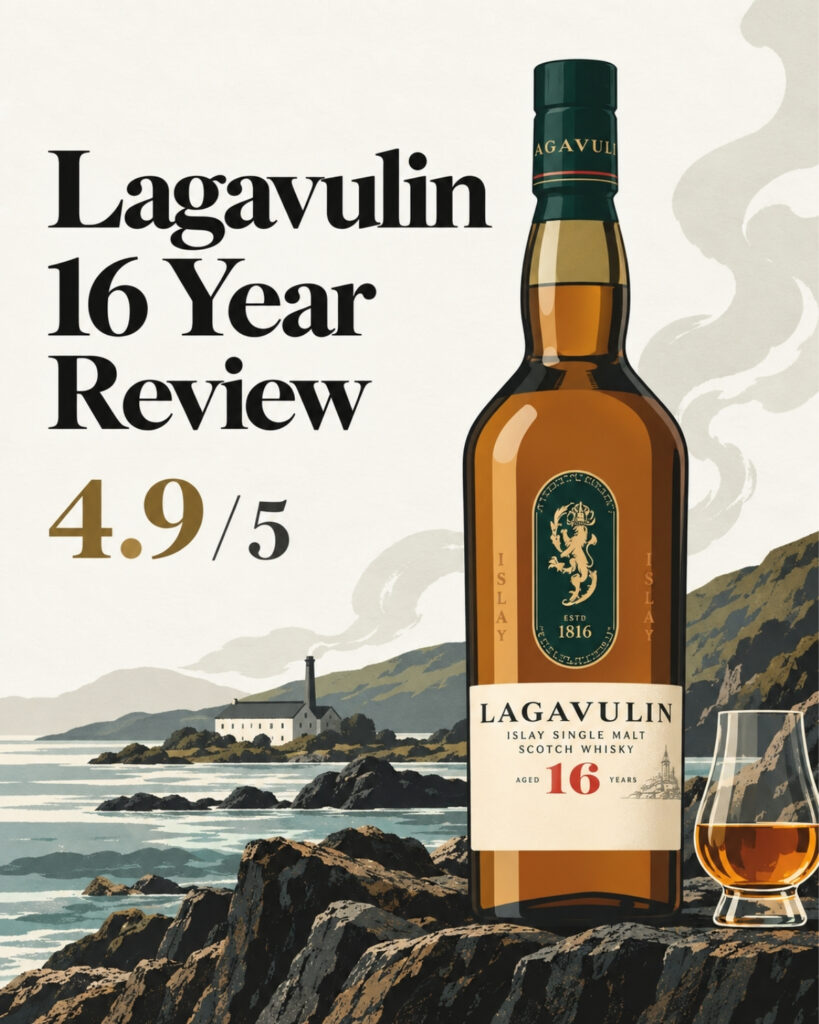
Lagavulin 16 Year Review

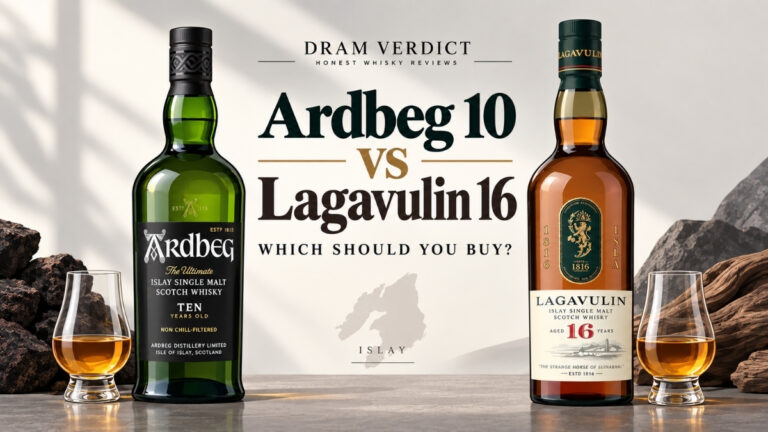
Lagavulin 16 Year Old bottle

The Verdict

4.9/ 5

Rated 4.9 out of 5 Outstanding

Peaty Rich Complex

Best for

Drinkers who already know they like heavily peated Scotch and want a rich, complex, full-bodied expression of it — not a first introduction to smoky whisky.

Quick Verdict

A genuinely complex, full-bodied Islay single malt where deep peat smoke and rich sweetness sit in real balance — not a beginner's whisky, but a benchmark for the style.

Tasted Apr 2026 · Neat

Where to Buy

We may earn a commission if you buy through our links. This never affects our scores.

Bottle Information

Lagavulin 16 Year Old is a single malt Scotch whisky produced at the Lagavulin distillery on Islay, matured for a minimum of 16 years and bottled at 43% ABV. It's the distillery's core, standard-bottling expression and one of the most widely recognized peated Islay malts on the market. Diageo hasn't officially disclosed the exact cask breakdown, but the whisky is widely reported to be matured primarily in ex-bourbon casks with a sherry-cask component, consistent with the deep sweetness that runs alongside its peat character. Long fermentation and slow distillation are commonly cited as contributing to Lagavulin's characteristically oily, full-bodied spirit.

Whisky Specs

Country
Scotland
Region
Islay
Distillery
Lagavulin
Brand
Lagavulin
Category
Single Malt
Age
16
ABV
43% ABV
Volume
US 750ml / UK 700ml
Value
Fair

Tasting Review

Lagavulin 16 sits at the flagship end of Islay’s most heavily peated style — the kind of Scotch that gets cited whenever someone wants a single example of what peat smoke actually tastes like. It’s matured a minimum of 16 years, which under Scotch Whisky Regulations means every component in the bottle spent at least that long in cask (see What Does a Whisky Age Statement Actually Mean? for how that rule works). At 43% ABV, it’s bottled a few points above the regulatory floor, without pushing into cask-strength territory.

This is about as far from a coastal Highland malt like Clynelish 14 as Scotch gets. Where Clynelish carries no smoke or peat character at all, Lagavulin builds its entire identity around it — medicinal, iodine-heavy peat smoke layered over a genuinely sweet, honeyed base. That contrast is a good reminder that “Scotch” isn’t one flavor (more on that split in Bourbon vs Scotch: What’s the Difference?): this and Clynelish are both Single Malt Scotch, made under the same regulations, and they taste almost nothing alike.

Tasted neat, what stands out is how integrated everything is. The peat here is genuinely strong — this isn’t a subtle, easing-you-in style of smoke — but 16 years in cask has rounded it into something layered rather than just aggressive, with real honeyed sweetness, dark chocolate and oak sitting alongside it rather than getting buried underneath it. It’s a full, oily whisky with real weight in the mouth, and it holds that complexity through a long finish rather than fading fast.

Current US pricing runs somewhere in the $80–$90 range for a 750ml bottle, which is a real jump from where this bottle sat a few years ago. Even at that price, it remains one of the more consistently well-regarded peated Islay malts on the market, and the experience in the glass backs that up. This isn’t a whisky for someone who’s on the fence about smoky Scotch — if peat isn’t your thing, no amount of maturation here is going to change that — but for anyone who already knows they like the style, this is close to a benchmark bottle.
Tasting Notes

Nose
Rich and composed, but with real weight and character behind it. Caramel and nuts sit against sulfur and medicinal notes, with a smokiness that's powerful yet restrained, plus fragrant wood, herbs, spice and a clear sea-salt edge.
Palate
That same balance of power and restraint carries onto the palate, which is oily in texture and complex overall. Honey and nuts meet soy sauce and medicinal notes, dark chocolate, spice, brine and oak, with the smoke running through all of it rather than sitting on top.
Finish
Toasty oak and a steady, unhurried smokiness hold on for a long finish.

Flavor Profile

  • Sweetness 3 / 5
  • Fruit 1 / 5
  • Spice 3 / 5
  • Oak 3 / 5
  • Smoke / Peat 4 / 5
  • Body 4 / 5

Pros

  • Genuinely complex and rich, with real depth that rewards sitting with it — the 16 years of maturation has smoothed out the rough edges without dulling the character
  • The peat is well-integrated with real sweetness and body rather than reading as one-dimensional smoke

Cons

  • No major weaknesses stood out in the neat tasting.

Final Verdict

Lagavulin 16 Year Old earns its reputation. The peat is unmistakably there, but 16 years in cask has rounded it into something layered rather than just aggressive — honey and dark chocolate sweetness sit alongside iodine, brine and toasted oak, carried by a genuinely full, oily body. It's not a whisky for someone easing into smoky Scotch, and it won't convert anyone who simply doesn't like peat, but for what it's trying to be, this is close to definitive.

Other Ways to Drink It

Dram Verdict's core Nose, Palate, Finish and Score above are tasted neat. These are Kaz's notes on other ways he's actually tried this bottle.

  • With Water

    Very Good

    Deep sweetness and toastiness come through, and it turns gentler overall, with the smoke folding into the rest of the flavor rather than fighting it. Rich, with a pleasant, lingering finish.

  • On the Rocks

    Good

    The sweetness pulls back and oak comes forward, turning drier overall. There's real depth here — people who like this profile will love it — but it's a different, more austere experience than neat.

  • Highball

    Very Good

    Good, but the richness is largely lost. Slightly sweet, elegant and still has some depth, though the iodine character comes through strongly.

Where to Buy

We may earn a commission if you buy through our links. This never affects our scores.

About the author

Kaz Bartender & Whisky Reviewer

Kaz is a chief bartender in Japan, with eight years behind the bar and six years reviewing whisky on Whisktender, his Japanese-language whisky site. Every Dram Verdict score and every personal tasting note comes from a whisky he has tasted himself, with one question always in mind: is this bottle worth buying?

Contents